

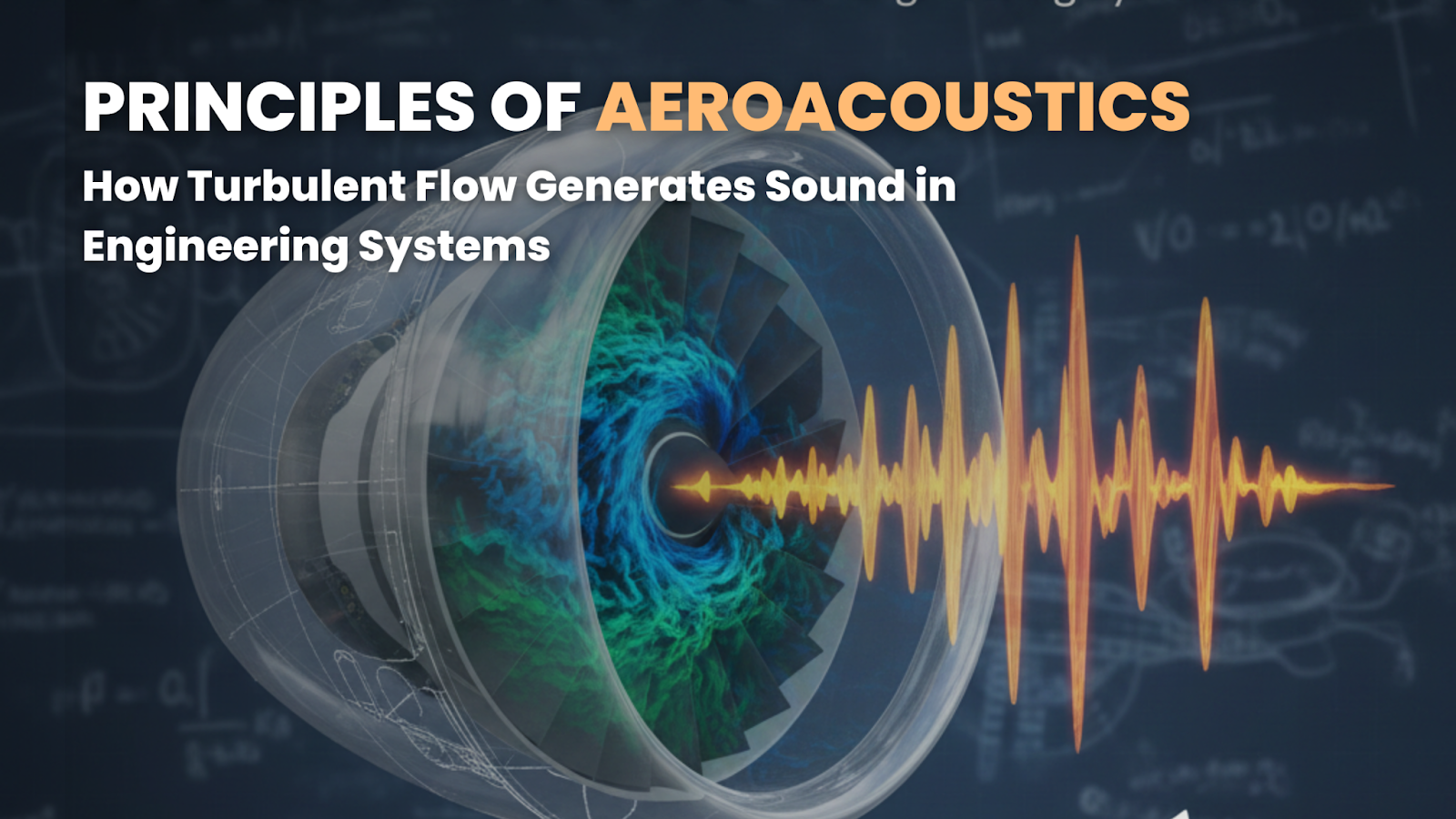
Turbulent fluid flow creates noise. And this is one of the most persistent challenges in engineering design. Unwanted noise always affects the efficiency, safety & user comfort, from aircraft engines to HVAC systems.
Aeroacoustics is the science of how moving fluids generate sound. It helps engineers to understand & minimize these effects.
With the help of ANSYS Fluent training & advanced computational fluid dynamics (CFD) tools, engineers can simulate, analyze & reduce turbulence-induced noise before physical prototypes are even built.
What is Aeroacoustics?
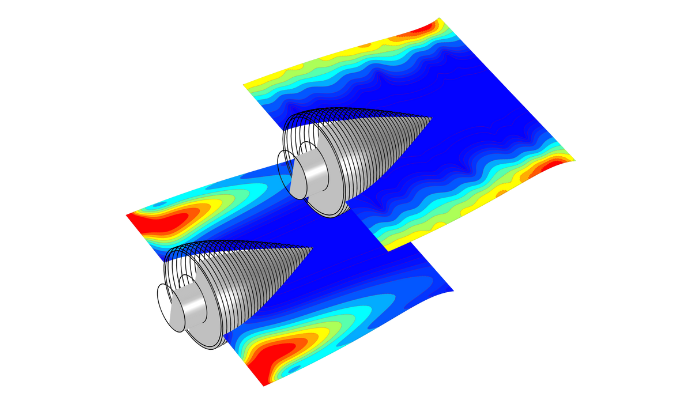
Aeroacoustics studies how fluid motion interacts with solid structures to produce sound.
When the flow of the fluid is turbulent, the vortices & the eddies are formed. This causes rapid pressure fluctuations, which then propagate as a sound wave.
In industries such as aerospace, automotive, & energy, understanding these pressure dynamics is crucial for designing quieter & more efficient systems.
What Are The Core Principles Of Aeroacoustics?
There are several principles that explain how turbulent flow generates the noise. The principles are:
- Lighthill’s Acoustic Analogy:
This theory models the noise generated by turbulent flow using the fluid dynamics equation. It often applies to jet engines.
- Curle’s Theory:
It describes how fluid flows over the solid surfaces. And the surfaces like the airfoils or ducts, add additional sound sources.
- Ffowcs Williams-Hawkings (FW-H):
It extends these models to the moving boundaries. Makes it invaluable for the study of fans, propellers & the rotating machinery.
- Flow-Induced Vibrations:
It explains how turbulence causes structures to vibrate & radiate noise, especially in pipeline & HVAC systems.
How Turbulent Flow Produces Noise
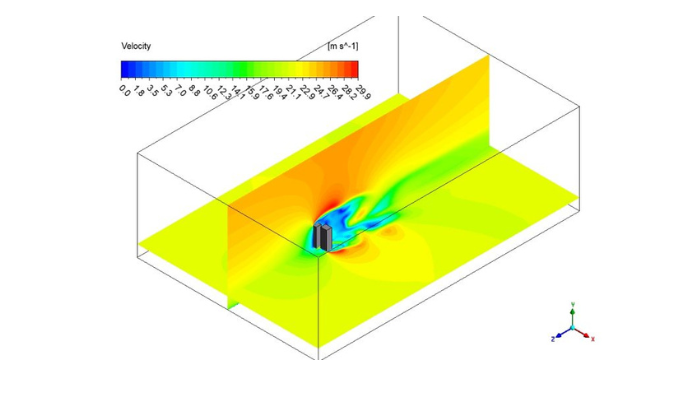
Turbulence is inherently chaotic in nature. As eddies & vortices collide in the flow. It creates the pressure difference that radiates as acoustic waves. The intensity of this noise depends on factors like flow velocity, fluid properties & geometry.
A 2022 report of the Aerospace Journal paper confirms the CFD’s accuracy in acoustic modeling. They use the hybrid Large-Eddy Simulation (LES) & FW-H models & reported the noise prediction within 3dB of experimental measurements.
Next time, when you hear a roar of jet engine or a whistle of the car window, that is the turbulence turning into a sound. And engineers can now visualize & reduce it before it even happens.
Role of CFD and ANSYS Fluent
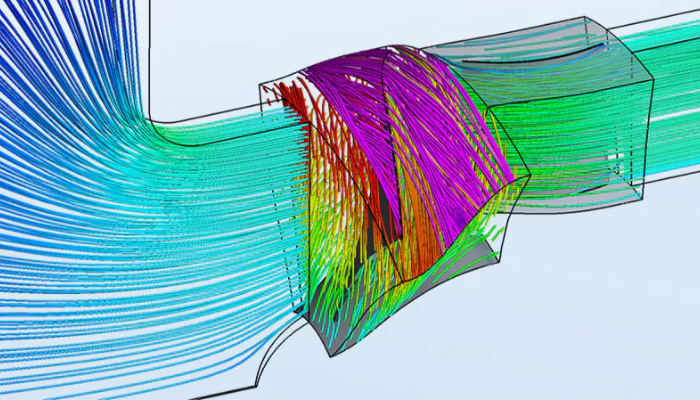
Computational fluid dynamics training equips engineers to simulate the complex turbulent flows & to identify primary noise sources.
With the ANSYS Fluent training, you will learn to apply turbulence models, acoustic analogies & post-processing techniques to evaluate the noise emissions early in the design process. This predictive capability helps to reduce physical testing. Also, it ensures compliance with noise regulations.
For those who are looking to upskill, a computational fluid dynamics course online offers flexible learning in turbulence modeling, acoustic wave propagation & flow-induced vibrations. These programs bridge the theory & practical simulation skills. And it is critical in the modern engineering industries.
Way Forward
Mastering aeroacoustics means mastering the art of silence within motion. By combining theory with the simulation-driven insights, engineers like you can design machines that are not only high performing but also optimised acoustically.
With a specialised Ansys Computational Fluid Dynamics course online, today’s engineers can turn turbulent noise into controlled, efficient performance.
Contact us today to get started!