

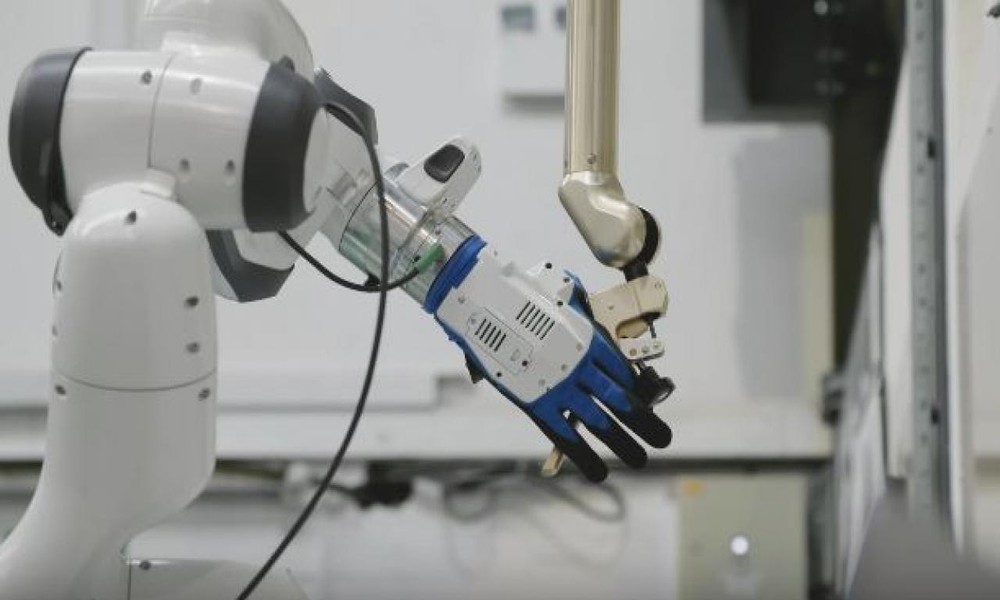
As robots move beyond factory floors into hazardous, distant, or inaccessible environments, direct human interaction becomes impractical or unsafe. Telerobotics and teleoperation address this challenge by allowing human operators to control robots remotely through carefully designed master-slave configurations. In this setup, human intent is translated into robotic action across distance, time, and sometimes extreme conditions. These systems blend mechanical engineering, communication networks, control theory, and artificial intelligence to extend human capability beyond physical presence. Understanding how telerobotics works is essential for grasping the future of human-machine collaboration.
Understanding the Master-Slave Control Model
At the core of teleoperation lies the master-slave architecture. The master device is operated by a human and captures movements, forces, or commands. The slave robot mirrors these actions in a remote environment. The relationship is continuous and tightly coupled, meaning any movement or adjustment by the operator is reflected almost immediately by the robot.
This model prioritises precision and responsiveness. In surgical robotics, for example, the master device may filter out hand tremors while scaling movements to enable micro-level accuracy. In industrial or exploration scenarios, the master-slave setup allows humans to perform tasks in environments that are too dangerous or distant, such as nuclear facilities, deep-sea locations, or space missions.
Role of Communication and Latency Management
Communication is a critical component of telerobotics. Commands, sensor data, and visual feedback must travel reliably between the operator and the robot. Latency, or delay in communication, can significantly impact performance. Even small delays may cause instability or reduce task accuracy.
To address this, modern teleoperation systems use predictive control, buffering strategies, and adaptive algorithms that compensate for delays. Visual, auditory, and haptic feedback are synchronised to maintain a sense of control and situational awareness. The goal is to ensure that the operator feels connected to the remote robot despite physical separation.
As these systems become more intelligent, AI techniques are increasingly used to predict operator intent, smooth control signals, and manage network uncertainties. Learners exploring intelligent control systems through an ai course in chennai often encounter these concepts as part of applied robotics and human-machine interaction modules.
Sensory Feedback and Human Perception
Effective teleoperation depends not only on sending commands but also on receiving feedback. Visual feedback through cameras provides situational awareness, while force or haptic feedback allows operators to feel resistance, texture, or contact forces. This sensory loop helps operators make informed decisions and perform delicate tasks with confidence.
Designing realistic feedback is challenging. Too much information can overwhelm the operator, while too little can reduce precision. Engineers must carefully balance fidelity and usability. Advances in sensor technology and signal processing continue to improve how accurately remote environments are represented to the human operator.
These developments are particularly important in medical, defence, and disaster response applications, where accuracy and perception directly influence safety and outcomes.
Integration of AI in Modern Teleoperation Systems
While traditional teleoperation relies heavily on direct human control, modern systems increasingly integrate AI to enhance performance. AI can assist by stabilising movements, detecting anomalies, or automating routine subtasks while leaving critical decisions to humans.
For example, a robot may autonomously avoid obstacles while the operator focuses on task execution. Machine learning models can also adapt control parameters based on operator behaviour, improving efficiency over time. This shared control approach reduces cognitive load and allows humans to manage complex tasks more effectively.
Understanding how AI augments teleoperation is becoming an important skill area. Exposure to these interdisciplinary applications through an ai course in chennai can help professionals connect theoretical AI concepts with real-world robotic systems.
Applications Across Industries
Telerobotics and teleoperation are used across a wide range of industries. In healthcare, surgeons perform minimally invasive procedures using robotic systems that enhance precision. In space exploration, robotic arms and rovers are controlled from Earth to conduct experiments and maintenance tasks. In industrial settings, robots handle hazardous materials or operate in environments unsafe for humans.
Disaster response is another critical application. Robots can be deployed in collapsed buildings, chemical spill zones, or fire-affected areas, providing real-time information and performing rescue-support tasks. In all these scenarios, teleoperation extends human reach while reducing risk.
Challenges and Future Directions
Despite significant progress, challenges remain. Network reliability, system complexity, and high development costs can limit adoption. Training operators to effectively use teleoperation systems is also essential, as human factors play a major role in success.
Future developments are likely to focus on tighter integration between AI and human control, improved haptic feedback, and more resilient communication systems. As autonomy increases, teleoperation may shift from continuous control to supervisory roles, where humans guide and intervene rather than directly control every action.
Conclusion
Telerobotics and teleoperation represent a powerful convergence of human intelligence and robotic capability. Through master-slave configurations, these systems enable precise remote control in environments where direct human presence is impossible or unsafe. As AI, communication technologies, and sensor systems continue to advance, teleoperation will become more intuitive, reliable, and impactful. This evolution will further redefine how humans and machines collaborate across distance, expanding the boundaries of what can be achieved remotely.